How To Edit A Podcast In Garageband For Ipad
Posted By admin On 02.01.21GarageBand User Guide for iPad
How to record and edit a podcast in Garageband? Garageband is an audio editing software that musicians and podcasters use to record and edit their music, songs, and podcasts. However, this fully equipped digital audio recording studio that is designed for macOS and iOS devices. Dec 27, 2017 Requirements to Create Podcast on iPhone / iPad. The requirement to setup your podcasting studio and doing podcasting on the road is different. You need to make sure you can carry your podcasting gears along with you easily and use them at any place.
You can edit cells in the Live Loops grid in a variety of ways. You can cut, copy, and paste cells, move cells, delete cells, and change cell settings. When you turn on cell editing, you cannot start or stop playback of cells (but you can edit cells that are already playing).
You can also copy regions in Tracks view and paste them in the grid, in a row using the same instrument as the track they were copied from.
Turn on cell editing
Tap the Edit Cells button in the lower-left corner of the Live Loops grid.
To turn off cell editing, tap the Edit Cells button again.
Cut a cell
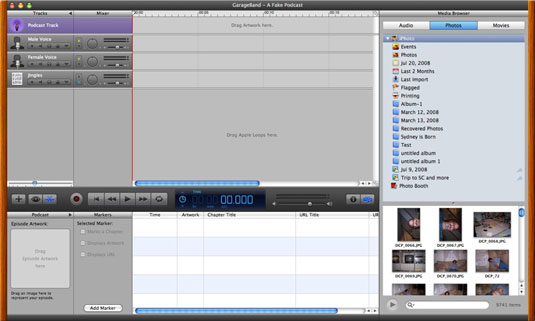
Apr 02, 2020 So, If Looking to start a podcast, you’ve come to the right place, Let me teach you how to record and edit podcasts on GarageBand. Work on your latest episode seamlessly and without much hassle, no extra cost involved, this app is my favourite for a reason. 1 From the opening GarageBand screen, click New Podcast Episode and type a name for your podcast. The main screen is a little different from the GarageBand screen for music. At the top of the tracks list is a special Podcast Track to drag photos or other artwork from your iPhoto Library (or elsewhere), accessible through the GarageBand media browser. Next are tracks to optimize for a male or female voice, plus Jingles. Sep 28, 2016 The Beginner's Guide to GarageBand for iPad - 2017 UPDATED Tutorial - Duration: 22:37. Technology for Teachers and Students 231,157 views. Edit cells in GarageBand for iPad. You can edit cells in the Live Loops grid in a variety of ways. You can cut, copy, and paste cells, move cells, delete cells, and change cell settings. When you turn on cell editing, you cannot start or stop playback of cells (but you can edit cells that are already playing). Feb 16, 2018 Garageband is a software that was primarily built to record music for those using a mac computer, however it's become an easy to use software to create and edit a podcast, too!
Double-tap the cell, then choose Cut from the Edit menu.
Copy a cell
Double-tap the cell, then choose Copy from the Edit menu.
Paste a cell
Double-tap a cell, then choose Paste from the Edit menu.
You can paste a cell in another row using the same Touch Instrument as the row it was copied from. You can also paste a cell from a row using the Audio Recorder or Amp to another row using either of these instruments, and paste a cell from a row using the Keyboard or Sampler to another row using either of these instruments. The cell takes the sound of the Touch Instrument in the row you you paste it to.
Move a cell
Touch and hold a cell, then drag it to an empty cell in the grid.
If you drag it to a cell that is not empty, the contents of the starting cell and the destination cell are swapped.
You can move a cell to another row using the same Touch Instrument as the row it was moved from. You can also move a cell from a row using the Audio Recorder or Amp to another row using either of these instruments, and move a cell from a row using the Keyboard or Sampler to another row using either of these instruments. The cell takes the sound of the Touch Instrument in the row you you move it to.
Delete a cell
Double-tap the cell, then choose Delete from the Edit menu.
Edit cell contents
Double-tap the cell, then choose Edit from the Edit menu.
You can edit the cell contents, similar to editing regions. For green cells, you can also edit notes in the cell, similar to editing notes in a region.
Change cell settings

Double-tap the cell, then choose Settings from the Edit menu.
Change one or more of the cell settings:
Gain: Drag the Gain slider left or right to adjust the cell’s volume (blue and yellow cells only).
Velocity: Drag the Velocity slider left or right to adjust the cell volume (green cells only).
Time Snap: Choose the Time Snap value for the cell.
Play Mode: Choose the play mode for the cell.
Looping: Tap the Looping switch to turn on looping for the cell.
Follow Tempo & Pitch: Tap to have the cell follow the song tempo and key (blue cells only).
Octaves: Tap the – and + buttons to raise or lower the pitch (green cells only).
Semitones: Tap the – and + buttons to raise or lower the pitch.
Speed: Drag the Speed slider left to right to change the speed (tempo) of the cell.
Reverse: Tap the Reverse switch to have the cell play in reverse.
Reset All: To reset all cell settings, tap Reset All.
/japurity-3-download.html. When you finish, tap Done.
While the Cell Settings menu is visible, you can tap the selected cell to start or stop playback, in order to hear your changes. You can also tap other cells and edit their settings.
Edit a column trigger
How To Edit A Podcast In Garageband For Ipad 7
Tap a column trigger , then tap one of the editing commands.
How To Edit A Podcast In Garageband For Ipad Air
Show a row in the Tracks view
In the Live Loops grid, double-tap a row header, then tap Show in Tracks view.
Show a track in the Live Loops grid
In Tracks view, double-tap a track header, then tap Show in Grid.
How To Edit A Podcast In Garageband For Ipad 2
/serato-scratch-live-setuop.html. Creating GarageBand podcasts on classroom iPads is a great way to blend technology and learning. Project assignments that incorporate podcasts created with GarageBand iPad app tap student’s communication and collaboration skills.
GarageBand has been around for a few years on the Mac and is known as a powerful tool for making music. However, it has a voice feature that can be used for adding vocals to music . . . or just as easily for recording your voice on a podcast. Even better, you can use the same tool for creating a musical opening or background soundtrack.
With the range of options offered for music and voice along with the capability to export and publish your final product, GarageBand has become the popular choice for many people producing simple podcasts on iPads.
GarageBand is a powerful recording tool. The following steps give you a quick-and-dirty introduction to using GarageBand for podcasting:
Create a new song with a few simple tracks.
You’ll use this short song as a themed intro each time you create a new podcast. Of course, you may also consider adding some royalty-free music.
Save your theme by tapping the My Songs button in the top right of the display.
You’re returned to the My Songs browser display.
Make a copy of your theme music by tapping and holding your Theme in the My Songs browser and then tapping the + copy icon.
Tap Done and then select your copy to use for your podcast.
You’ll find yourself back in TrackView, where you can tap the Instruments button on the top toolbar.
Tap the Audio Recorder to begin recording the podcast.
Tap the Record button, and speak clearly and directly into the iPad microphone.
The iPad mic is located in the top-left corner when the iPad is facing you (with the Home button at the bottom).
You could also use an external microphone attached to the iPad to record your podcast. Using an external microphone may help you improve the sound quality of your podcast.
Press the record button at any time to stop.
Listen and re-record as often as needed.
Tap and hold the podcast in your My Songs view and then tap the Share icon above it to select how you want to share it.
Your options include uploading to a SoundCloud account, taking it into iMovie if you want to add images or video, or sharing it via iTunes or e-mail.
You can publish your GarageBand podcast via iTunes. Tap iTunes from the Share menu, and save your podcast as an iTunes file or as a GarageBand file for editing on a different computer. To publish, select iTunes.
Start iTunes on your computer with your iPad connected wirelessly or by cable. Click your iPad in the source list and select your iPad’s Apps pane on the top tabs. Scroll to the File Sharing options at the bottom of the window and select GarageBand. Your podcast should be listed, and you can drag it to your desktop or any folder. Now you’re ready to submit to iTunes.
Go to Apple’s website for all the details of podcast submission.
How To Edit A Podcast In Garageband For Ipad 7
You can also publish your podcast by uploading to a blog-based website such as Posterous or WordPress. Apple also provides Podcast Producer as part of its Mac OS X Server installations; you may want to look into it as an option for publishing your podcasts.
How To Edit A Podcast In Garageband For Ipad Youtube
Keep things moving if you want to maintain interest. Try to keep topic segments around seven minutes or less. Using guests or recorded interviews is a great way to mix the conversation flow and tone. You should also consider incorporating musical backgrounds and little jingles as a way to transition between topics in a longer podcast.